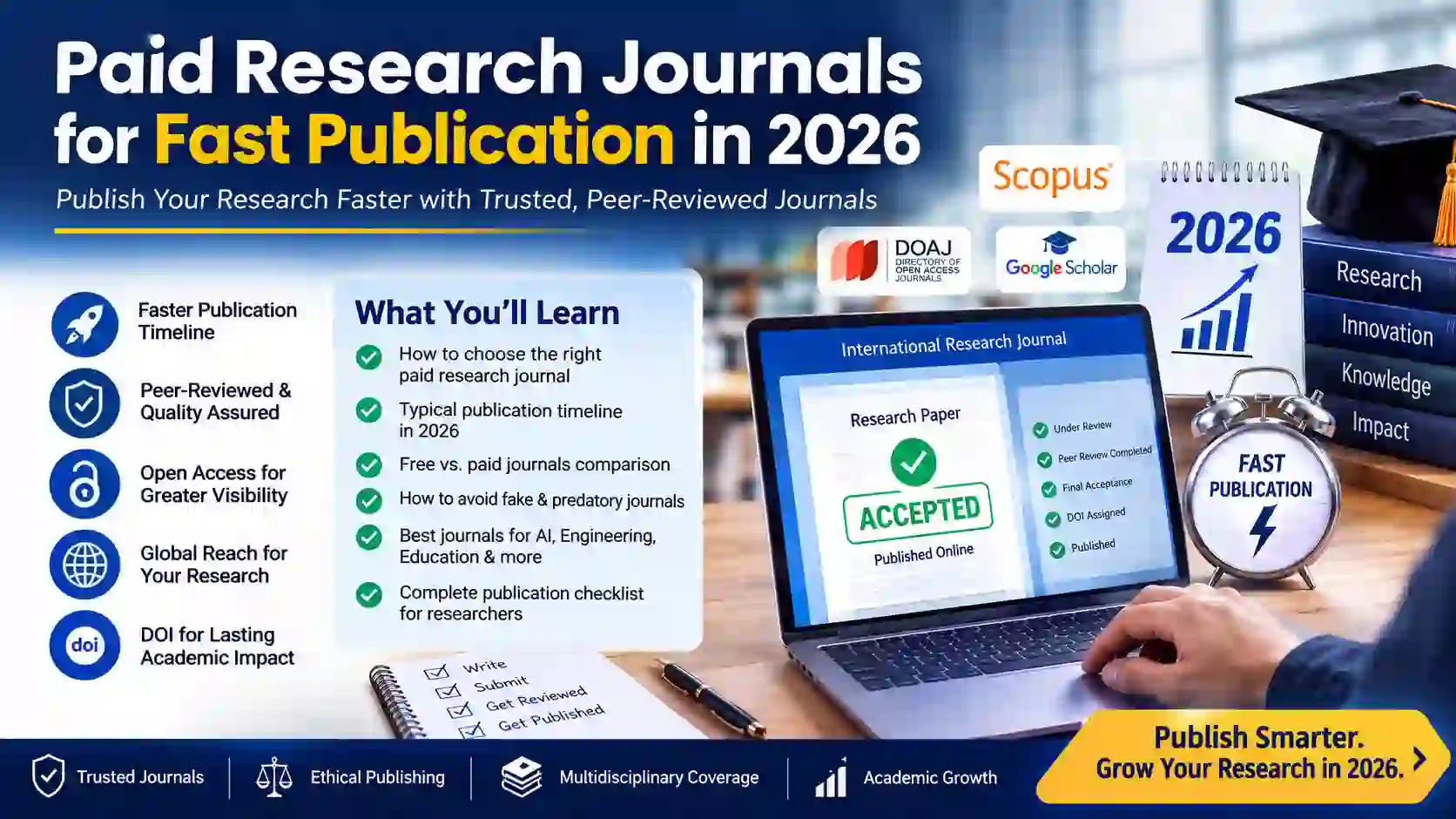
Researchers today are under increasing pressure to publish high-quality work within limited timelines. Whether the goal is completing a PhD, applying for promotion, meeting funding requirements, or strengthening an academic profile, selecting the right paid research journal can significantly influence publication success.
However, many authors struggle to distinguish between legitimate paid journals that provide genuine editorial services and unethical publishers that simply collect publication fees without maintaining proper peer-review standards.
This comprehensive guide explains everything researchers need to know before submitting their manuscript to a paid journal in 2026. You'll learn how publication fees work, how to evaluate journal quality, what fast publication really means, how to avoid predatory journals, and how to select a trusted journal that matches your research objectives.
If you are new to academic publishing, you may also find our complete guide helpful: Research Paper Publication Guide for Beginners .
What Are Paid Research Journals?
A paid research journal is an academic journal that charges an author publication fee, commonly referred to as an Article Processing Charge (APC) or publication fee, after a manuscript has successfully completed editorial screening and peer review.
These fees generally support activities such as:
- Editorial management
- Peer-review coordination
- Professional copyediting
- Typesetting and formatting
- DOI registration
- Website hosting
- Digital archiving
- Long-term preservation
- Open-access publication
It is important to understand that charging publication fees does not automatically indicate poor quality. Many respected international publishers operate using an APC model while maintaining rigorous peer-review standards.
Instead of asking, "Does the journal charge a fee?", researchers should ask, "Does the journal provide transparent editorial and peer-review services?"
Why Do Researchers Choose Paid Journals?
The popularity of paid journals continues to grow because they often provide faster editorial workflows while maintaining transparent publication processes.
Some common reasons include:
- Faster editorial decisions
- Quicker peer-review timelines
- Immediate online publication
- Open-access visibility
- DOI assignment
- Global accessibility
- Professional article formatting
- Permanent article availability
For researchers facing strict submission deadlines, choosing a reputable journal with an efficient editorial workflow can reduce publication delays without compromising research quality.
Are Paid Journals Legitimate?
Yes—but only when they follow internationally accepted publishing practices.
A legitimate paid journal should clearly disclose:
- Publication fees
- Peer-review policy
- Editorial board information
- Publication ethics
- Copyright policy
- Licensing terms
- Indexing information
- Author guidelines
- Publication timelines
Unfortunately, some fraudulent publishers imitate legitimate journals and promise publication within a few days without conducting genuine peer review.
Before paying any publication fee, researchers should carefully evaluate the journal's credibility.
Read our detailed guide: How to Select the Right Peer-Reviewed Journal for Publication .
Paid Journals vs Predatory Journals
| Legitimate Paid Journal | Predatory Journal |
|---|---|
| Transparent publication fee | Hidden charges |
| Real peer review | No peer review |
| Qualified editorial board | Fake editors |
| Clear publication policies | Missing policies |
| Ethical publishing practices | Spam email invitations |
| Professional website | Poor-quality website |
| DOI registration | Often missing DOI |
| Publication after review | Acceptance within hours |
Learn how to recognize suspicious publishers by reading: How to Avoid Fake Scopus Journals .
How Fast Is "Fast Publication"?
Many journals advertise fast publication, but publication speed varies depending on editorial quality and peer-review standards.
A responsible journal typically follows these stages:
- Initial manuscript screening
- Editorial assessment
- Peer review
- Author revision
- Final acceptance
- Copyediting
- Typesetting
- DOI assignment
- Online publication
Some journals offer expedited editorial workflows for authors with urgent academic deadlines. However, researchers should be cautious of publishers claiming publication within 24–48 hours without any evidence of peer review.
To understand how quality peer review works, visit: How Peer Review Works in Academic Journals .
Who Should Consider Paid Journals?
Paid journals may be suitable for:
- PhD scholars
- Master's students
- University faculty
- Independent researchers
- Industry professionals
- Government researchers
- Medical researchers
- Engineering researchers
- Computer science researchers
- Multidisciplinary research teams
Researchers working across multiple disciplines may also benefit from publishing in multidisciplinary journals that welcome cross-disciplinary studies.
Explore our article: Why Researchers Prefer Multidisciplinary Journals for Publication .
Search Intent Covered in This Guide
This article is designed to answer every major question researchers have before choosing a paid journal, including:
- What are paid journals?
- Are paid journals trustworthy?
- How much do publication fees cost?
- How can researchers identify quality journals?
- Which journals offer fast publication?
- What should authors verify before paying publication fees?
- How do paid journals compare with free journals?
- How can researchers avoid predatory publishers?
In the next section, we'll examine how publication fees are determined, compare different journal pricing models, evaluate commercial factors that matter before submission, and provide a practical checklist for selecting a trusted paid research journal in 2026.