ISSN (Online): 2833-7298
ISSN (Print): 2833-7301
Publication Fees: Free (Free up to 10 pages; USD 5 per additional page)

The demand for high-quality academic publishing has increased significantly in recent years as researchers, universities, and scientific institutions continue to produce innovative research across multiple disciplines. One of the most trusted methods for ensuring research quality and credibility is the publication of peer reviewed articles in scientific report journal platforms.
Peer-reviewed journals play a major role in maintaining academic standards by evaluating research through expert review processes before publication. Scientific report journals help researchers share reliable findings, innovative ideas, technical advancements, and evidence-based studies with the global academic community.
Today, scientific journals are essential for the advancement of science, technology, medicine, education, engineering, and social sciences. Researchers worldwide rely on peer-reviewed publications to communicate discoveries, validate research outcomes, and contribute to academic progress.
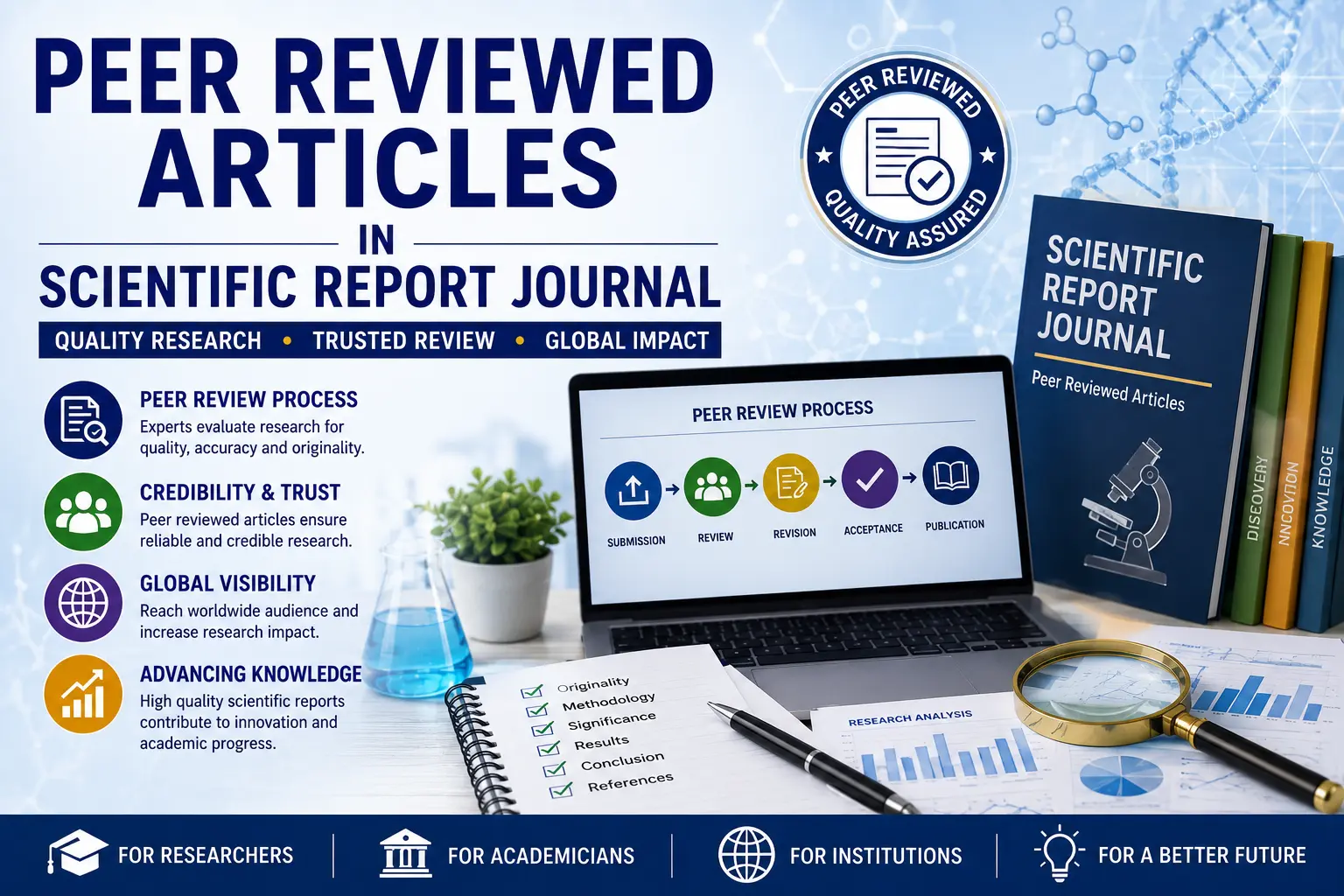
Peer reviewed articles are scholarly research papers that are evaluated by experts in the same academic field before publication. The peer review process ensures that the submitted research meets quality standards, follows ethical guidelines, and contributes valuable knowledge to the academic community.
During peer review, independent reviewers examine the manuscript’s methodology, originality, research findings, references, conclusions, and overall academic quality. Based on reviewer recommendations, the journal editor may accept, reject, or request revisions for the manuscript.
This process helps maintain the integrity and reliability of scientific publishing while preventing the publication of inaccurate or low-quality research.
A scientific report journal provides a platform for researchers to publish scientific findings, technical studies, review papers, experimental research, and case studies. These journals support knowledge sharing and help researchers communicate important discoveries to a wider academic audience.
Scientific report journals are widely used by:
These journals contribute significantly to global scientific development by promoting innovation, academic collaboration, and evidence-based research.
The peer review process is one of the most important components of academic publishing. It ensures that published articles meet scientific standards and provide trustworthy information.
The author submits the research paper to the journal according to the journal’s submission guidelines and formatting requirements.
The editor reviews the manuscript to verify whether the paper fits the journal’s scope, follows ethical standards, and meets basic quality requirements.
Experts in the relevant field are selected to review the manuscript. Reviewers evaluate the originality, methodology, technical quality, references, and significance of the research.
Reviewers provide comments and recommendations. They may suggest revisions, corrections, or improvements before publication.
The author revises the manuscript according to reviewer comments and resubmits the updated version for final evaluation.
The editor makes the final publication decision based on reviewer recommendations and the quality of revisions submitted by the author.
Peer-reviewed publications are considered more trustworthy because they undergo expert evaluation before publication. This increases the credibility of the research and the author.
Scientific report journals help researchers reach global audiences and improve research visibility within academic communities.
Academic publications support faculty promotions, scholarship applications, research grants, and professional recognition.
Peer review validates the quality and originality of research findings, improving confidence in published work.
Peer reviewed articles contribute to scientific progress by sharing innovative ideas and research findings with scholars worldwide.

Researchers should carefully select journals before submitting manuscripts. A good scientific report journal generally includes:
Publishing in reputable journals improves research quality, visibility, and long-term academic impact.
Scientific report journals may publish articles from multiple academic disciplines including:
Modern research often combines multiple academic disciplines to solve complex scientific and technological problems. Researchers looking for an international platform for academic publishing can explore the Multidisciplinary Research Journal for publishing scholarly articles, review papers, and innovative scientific studies.
Multidisciplinary journals encourage collaboration between researchers from engineering, computer science, medical sciences, education, management, and social sciences.
Open access scientific journals allow readers to access research articles freely without subscription barriers. This improves global knowledge sharing and increases research accessibility.
Many researchers prefer open access journals because they:
Open access publishing continues to grow rapidly as academic institutions support free and accessible scientific communication.
Select a topic that provides original insights, practical solutions, or innovative methodologies.
Review previous studies carefully to understand research gaps and existing knowledge.
Cite high-quality scholarly sources and follow the journal’s citation style accurately.
Organize the manuscript with proper sections including abstract, introduction, methodology, results, discussion, and conclusion.
Check grammar, formatting, references, and plagiarism before submitting the manuscript.

The International Journal of Multidisciplinary Research and Explorer (IJMRE) is an international academic journal dedicated to publishing peer reviewed articles, scientific reports, review papers, and multidisciplinary research manuscripts from scholars around the world.
IJMRE supports open access publishing and promotes high-quality academic research across multiple disciplines including engineering, computer science, management, medical sciences, humanities, and education.
The future of scientific publishing is becoming increasingly digital, collaborative, and open access. Researchers now use advanced technologies for data analysis, manuscript management, and global research communication.
Artificial intelligence, machine learning, and digital publishing platforms are improving publication workflows and research accessibility. At the same time, academic institutions continue emphasizing ethical publishing practices and research transparency.
Peer-reviewed scientific journals will continue playing a critical role in maintaining research quality, supporting innovation, and promoting evidence-based knowledge worldwide.
Publishing peer reviewed articles in scientific report journal platforms is essential for maintaining academic quality, improving research credibility, and advancing global scientific knowledge. Peer review ensures that scholarly publications meet professional standards while helping researchers communicate reliable findings to the international academic community.
Scientific report journals provide researchers with opportunities to share innovative ideas, collaborate across disciplines, and contribute to scientific and technological progress. As research becomes increasingly interdisciplinary and globally connected, peer-reviewed journals will remain fundamental to academic publishing and scientific advancement.
Submit your original research paper, review article, or scientific manuscript to IJMRE and share your research with the global academic community.
The International Journal of Multidisciplinary Research and Explorer (IJMRE) is a non-profit, open-access journal that does not charge any submission, processing, or publication fees. Donations made through this button are entirely voluntary and are used solely to support the maintenance, technical infrastructure, and continued accessibility of open research. Contributions do not influence editorial decisions or the peer review process in any way.