ISSN (Online): 2833-7298
ISSN (Print): 2833-7301
Publication Fees: Free (Free up to 10 pages; USD 5 per additional page)

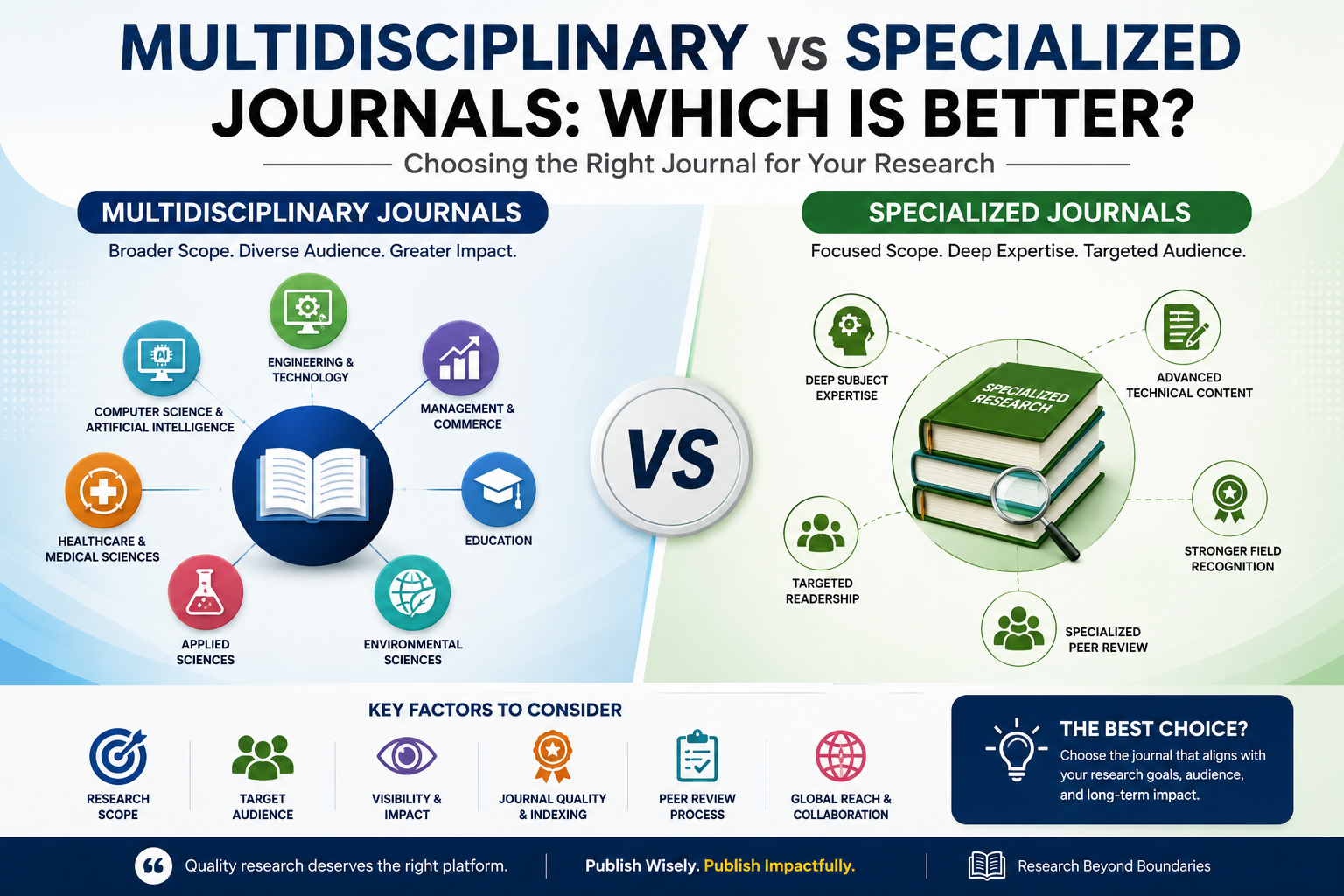
Choosing the right journal is one of the most important decisions researchers make before submitting their work for publication. While some authors prefer highly specialized journals that focus on a specific field, others choose multidisciplinary journals that welcome research from multiple disciplines.
The decision can significantly affect research visibility, readership, citations, and academic impact. Understanding the strengths and limitations of both publication models helps researchers select the most appropriate journal for their work.
This article compares multidisciplinary and specialized journals to help authors determine which option is better for their research goals.
Researchers looking for multidisciplinary publication opportunities can explore the International Journal of Multidisciplinary Research and Explorer (IJMRE).
A multidisciplinary journal publishes research from various academic disciplines within a single publication platform. These journals encourage knowledge sharing across fields and often publish studies that combine multiple research areas.
Common subject areas include:
Learn more about multidisciplinary publishing through Multidisciplinary Research Journal.
A specialized journal focuses on a particular discipline, research area, or academic niche. These journals are designed for readers, reviewers, and researchers working within a specific field.
Examples include journals dedicated exclusively to:
Specialized journals often attract highly targeted audiences with deep expertise in a specific subject area.
| Factor | Multidisciplinary Journals | Specialized Journals |
|---|---|---|
| Research Scope | Broad | Narrow |
| Audience | Diverse Academic Community | Field-Specific Researchers |
| Interdisciplinary Research | Highly Suitable | May Be Limited |
| Collaboration Opportunities | High | Moderate |
| Knowledge Exchange | Cross-Disciplinary | Within One Discipline |
| Research Visibility | Broad Exposure | Targeted Exposure |
Multidisciplinary journals are ideal when research combines concepts, methods, or applications from multiple disciplines.
Examples include:
Researchers working on interdisciplinary topics often benefit from the broader readership offered by multidisciplinary journals.
Additional insights can be found in Why Researchers Prefer Multidisciplinary Journals for Publication.
Specialized journals are often the preferred option when research focuses on highly technical or discipline-specific topics.
These journals may provide:
Researchers seeking recognition within a specific field may benefit from publishing in specialized journals that are well-established in that discipline.
Visibility is an important factor when selecting a publication venue.
Multidisciplinary journals often expose research to readers from multiple academic backgrounds, potentially increasing awareness of the work across disciplines.
Specialized journals, however, may provide stronger visibility among researchers working specifically within the same field.
The best choice depends on whether authors want broad interdisciplinary exposure or focused disciplinary recognition.
Regardless of journal type, peer review remains one of the most important indicators of publication quality.
Researchers should evaluate:
Authors can learn more by reading How Peer Review Works in Academic Journals.
A common misconception is that multidisciplinary journals are automatically better or worse than specialized journals. In reality, journal quality depends on factors such as:
Researchers should verify indexing and peer review information before submitting manuscripts.
Helpful resources include:
Whether choosing a multidisciplinary or specialized journal, researchers should be cautious of journals that make unrealistic publication promises or provide unclear editorial information.
Warning signs include:
Researchers can learn more from How to Avoid Fake Scopus Journals.
Before submitting a manuscript, researchers should ask:
A comprehensive guide is available in How to Select the Right Peer Reviewed Journal for Publication.
There is no universal answer to whether multidisciplinary journals or specialized journals are better. The right choice depends on the nature of the research, publication objectives, and intended audience.
Multidisciplinary journals are particularly valuable for interdisciplinary research, broader visibility, and cross-disciplinary collaboration. Specialized journals may offer deeper engagement with experts in a specific field and targeted academic recognition.
Ultimately, researchers should focus on selecting reputable peer-reviewed journals that align with their research goals and maximize the impact of their scholarly contributions.
multidisciplinary journals vs specialized journals, multidisciplinary research publication, specialized academic journals, peer reviewed journals, interdisciplinary research, journal selection, academic publishing, research visibility, scholarly journals, research publication guide
The International Journal of Multidisciplinary Research and Explorer (IJMRE) is a non-profit, open-access journal that does not charge any submission, processing, or publication fees. Donations made through this button are entirely voluntary and are used solely to support the maintenance, technical infrastructure, and continued accessibility of open research. Contributions do not influence editorial decisions or the peer review process in any way.