ISSN (Online): 2833-7298
ISSN (Print): 2833-7301
Publication Fees: Free (Free up to 10 pages; USD 5 per additional page)

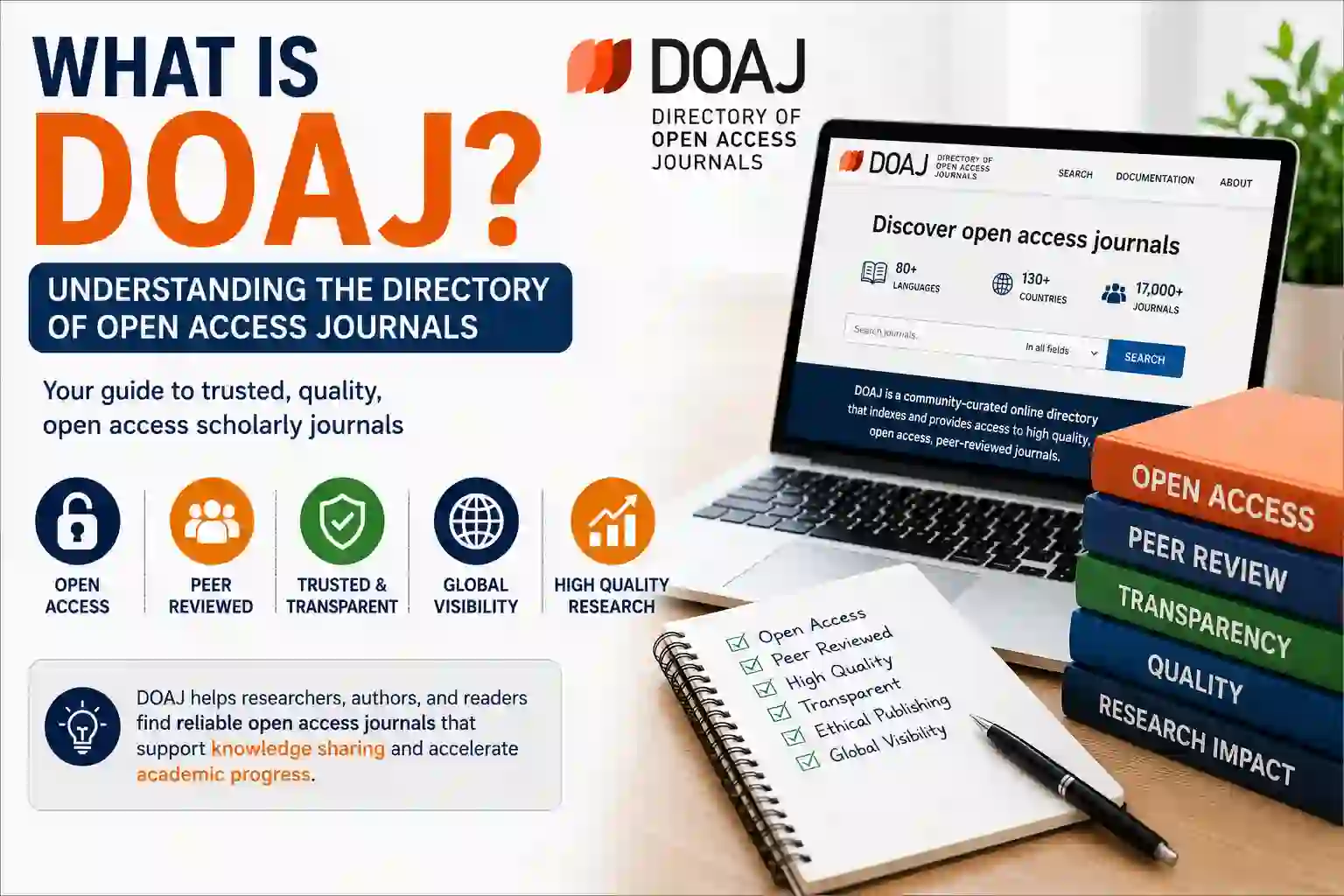
The Directory of Open Access Journals (DOAJ) is one of the most recognized resources for researchers seeking high-quality open access journals. Whether you are a PhD scholar, academic researcher, faculty member, or student, understanding DOAJ can help you identify trustworthy journals and avoid questionable publication outlets.
As academic publishing continues to expand globally, researchers often face challenges when selecting suitable journals for their manuscripts. DOAJ serves as an important quality indicator by listing journals that meet specific standards of transparency, accessibility, and publishing ethics.
This guide explains what DOAJ is, how it works, why it matters for researchers, and how authors can use it to identify reputable journals for publication.
Researchers looking for publication opportunities can also explore the IJMRE journal platform for academic publishing resources and multidisciplinary research support.
DOAJ (Directory of Open Access Journals) is an independent online directory that indexes and provides access to high-quality open access scholarly journals from around the world.
The directory was created to improve the visibility, accessibility, reputation, and impact of open access academic journals.
Unlike commercial indexing databases, DOAJ focuses specifically on journals that provide free access to research articles without subscription barriers.
Today, thousands of journals from multiple disciplines are included in DOAJ, making it a valuable resource for authors and readers alike.
DOAJ helps researchers identify journals that follow recognized publishing standards and ethical practices.
Key benefits include:
Researchers often use DOAJ when evaluating publication options alongside peer review policies, indexing status, and journal scope.
Journals must meet specific requirements before being included in DOAJ.
Evaluation typically focuses on:
This screening process helps researchers identify journals that maintain professional publishing practices.
Many researchers ask whether journals listed in DOAJ are peer reviewed.
The answer is that many DOAJ-listed journals use peer review, but researchers should always verify the journal's specific review process.
Peer review remains one of the most important indicators of publication quality because manuscripts are evaluated by subject experts before publication.
To better understand the review process, researchers can read How Peer Review Works in Academic Journals.
Researchers often confuse DOAJ and Scopus because both are associated with journal quality and research visibility.
| Feature | DOAJ | Scopus |
|---|---|---|
| Main Focus | Open Access Journals | Research Indexing Database |
| Access Type | Free Access | Indexing Service |
| Publication Visibility | High | Very High |
| Peer Review Requirement | Varies by Journal | Usually Required |
| Research Discovery | Open Access Focus | Citation and Indexing Focus |
Researchers interested in indexing differences can also read Scopus Journals vs Peer Reviewed Journals.
Although DOAJ helps identify reputable journals, researchers should still conduct independent verification before manuscript submission.
Important checks include:
Researchers can also follow the guidance in How to Check Whether a Journal Is Scopus Indexed and Peer Reviewed.
Unfortunately, some predatory publishers misuse the term "open access" to attract authors.
Researchers should be cautious if a journal:
Authors should also review How to Avoid Fake Scopus Journals to learn how to identify suspicious publication practices.
Publishing in trusted open access journals can provide several advantages:
Researchers interested in high-quality publication opportunities can explore Best Peer Reviewed Multidisciplinary Research Journals.
Choosing the right journal requires more than checking indexing status.
Authors should evaluate:
For a detailed selection strategy, researchers can read How to Select the Right Peer Reviewed Journal for Publication.
Many DOAJ-listed journals publish multidisciplinary research that combines fields such as engineering, computer science, management, education, healthcare, and emerging technologies.
Researchers seeking interdisciplinary publication opportunities can also review:
Many researchers focus exclusively on indexing labels while ignoring journal quality indicators.
A strong journal should demonstrate:
Researchers can learn more by reading Why Authors Should Publish in Top Peer Reviewed Journals Instead of Fake Scopus Journals.
The Directory of Open Access Journals (DOAJ) plays an important role in helping researchers identify credible open access journals that support transparent and ethical publishing practices.
While DOAJ can be a valuable indicator of journal quality, authors should still evaluate peer review policies, editorial standards, indexing status, and journal relevance before submission.
By combining DOAJ verification with careful journal selection, researchers can improve publication success, increase research visibility, and strengthen their academic reputation.
DOAJ, directory of open access journals, DOAJ journals, open access journals, peer reviewed journals, academic publishing, scholarly journals, research publication, multidisciplinary journals, journal selection guide
```
The International Journal of Multidisciplinary Research and Explorer (IJMRE) is a non-profit, open-access journal that does not charge any submission, processing, or publication fees. Donations made through this button are entirely voluntary and are used solely to support the maintenance, technical infrastructure, and continued accessibility of open research. Contributions do not influence editorial decisions or the peer review process in any way.