ISSN (Online): 2833-7298
ISSN (Print): 2833-7301
Publication Fees: Free (Free up to 10 pages; USD 5 per additional page)

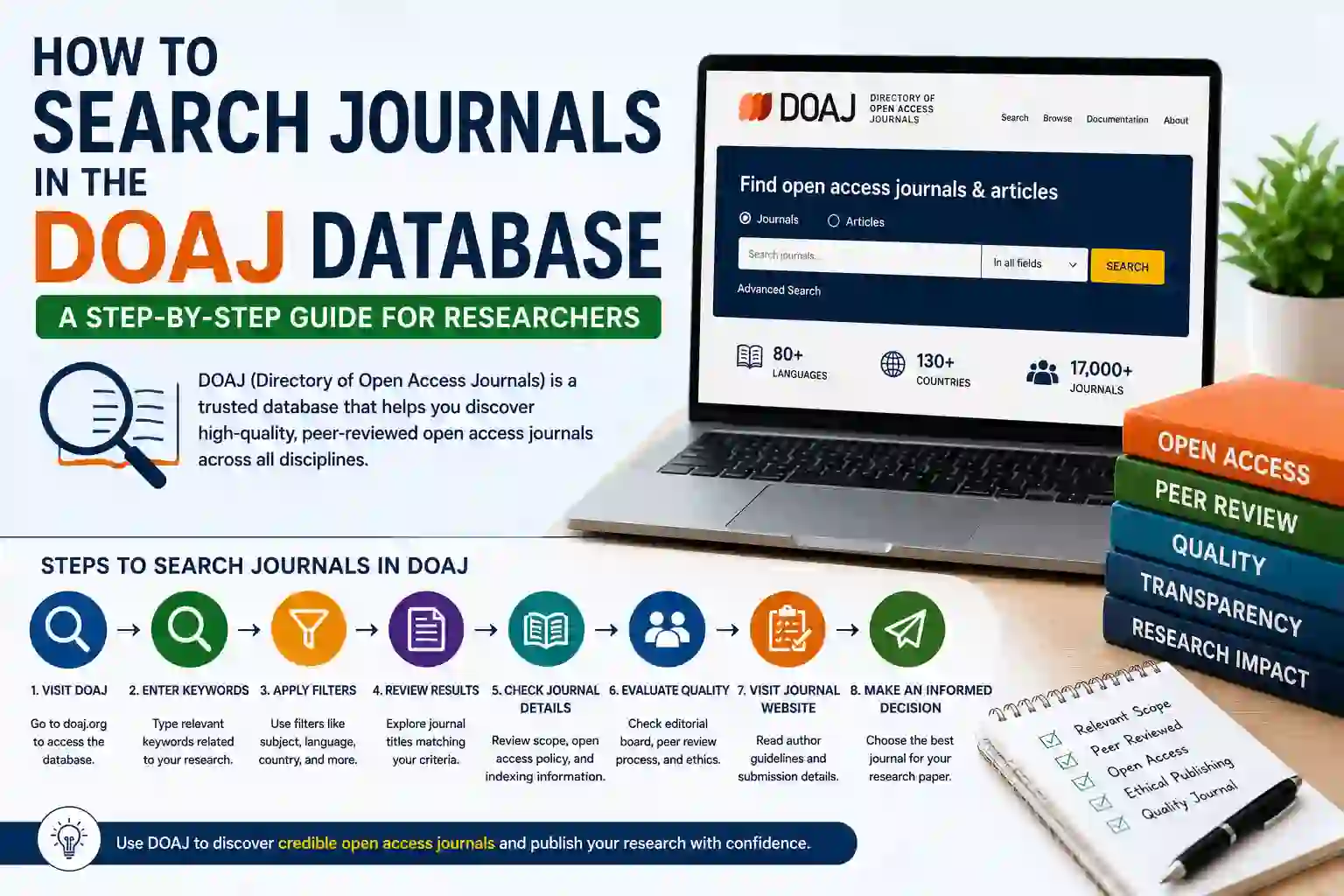
Finding a trustworthy academic journal is one of the most important steps in the research publication process. With thousands of journals available online, researchers often struggle to identify credible publication venues that follow ethical publishing standards and provide quality peer review.
The Directory of Open Access Journals (DOAJ) is one of the world's most trusted resources for discovering high-quality open access journals across multiple disciplines. Whether you are a PhD scholar, researcher, faculty member, or student, learning how to search journals in the DOAJ database can help you identify suitable journals for your research and avoid questionable publishers.
This guide explains how researchers can effectively search for journals in the DOAJ database and use the available tools to find the best publication opportunities.
Researchers seeking publication guidance and multidisciplinary journal resources can also visit the IJMRE Journal Platform.
The Directory of Open Access Journals (DOAJ) is an online directory that indexes high-quality open access scholarly journals from around the world. The database helps researchers identify journals that provide free access to research articles while maintaining transparency in publishing practices.
If you are new to DOAJ, you can first read What is DOAJ? Understanding the Directory of Open Access Journals.
Researchers use DOAJ because it helps simplify journal selection and provides access to reputable open access publications.
Key advantages include:
Before searching the DOAJ database, researchers should clearly identify the subject area of their manuscript.
Consider:
For example, a manuscript combining artificial intelligence and healthcare may fit within a multidisciplinary journal rather than a highly specialized publication.
Researchers working on interdisciplinary topics can also explore the Multidisciplinary Research Journal.
The most effective way to search the DOAJ database is by using keywords related to your research topic.
Examples include:
Using precise keywords helps narrow search results and identify journals that align closely with your research objectives.
DOAJ allows users to refine journal searches using subject categories.
Researchers can filter journals by:
These filters help researchers quickly identify journals that match their publication goals.
Finding a journal is only the first step. Researchers should carefully examine whether the journal's aims and scope align with their manuscript.
A journal with a strong scope match typically provides:
Researchers should always verify how manuscripts are evaluated before publication.
Important questions include:
To better understand manuscript evaluation, researchers can read How Peer Review Works in Academic Journals.
One of the best ways to evaluate a journal is by reviewing its published articles.
Researchers should assess:
This provides valuable insight into the journal's academic standards.
A reputable journal typically has an experienced editorial board consisting of qualified academics and researchers.
Researchers should verify:
Although DOAJ is valuable for finding open access journals, researchers often compare journal information with other indexing systems and databases.
Understanding the difference between indexing and peer review helps authors make informed publication decisions.
Useful resources include:
One of the major benefits of using the DOAJ database is that it helps researchers identify journals that demonstrate transparency and ethical publishing practices.
However, authors should still perform independent verification before submission.
Researchers should avoid journals that:
Researchers can also read How to Avoid Fake Scopus Journals.
You can learn more in Benefits of Publishing Research Papers in DOAJ Indexed Journals.
After identifying potential journals, researchers should evaluate:
For detailed guidance, read How to Select the Right Peer Reviewed Journal for Publication.
The DOAJ database is a valuable resource for researchers seeking credible open access journals. By using keywords, filtering subject areas, reviewing journal scopes, and evaluating peer review practices, authors can identify publication venues that align with their research goals.
A systematic journal search strategy helps researchers avoid unsuitable journals, improve publication success, and maximize the visibility and impact of their scholarly work.
how to search journals in DOAJ, DOAJ database, directory of open access journals, open access journals, peer reviewed journals, journal search guide, academic publishing, journal selection, research publication, multidisciplinary journals
The International Journal of Multidisciplinary Research and Explorer (IJMRE) is a non-profit, open-access journal that does not charge any submission, processing, or publication fees. Donations made through this button are entirely voluntary and are used solely to support the maintenance, technical infrastructure, and continued accessibility of open research. Contributions do not influence editorial decisions or the peer review process in any way.