ISSN (Online): 2833-7298
ISSN (Print): 2833-7301
Publication Fees: Free (Free up to 10 pages; USD 5 per additional page)

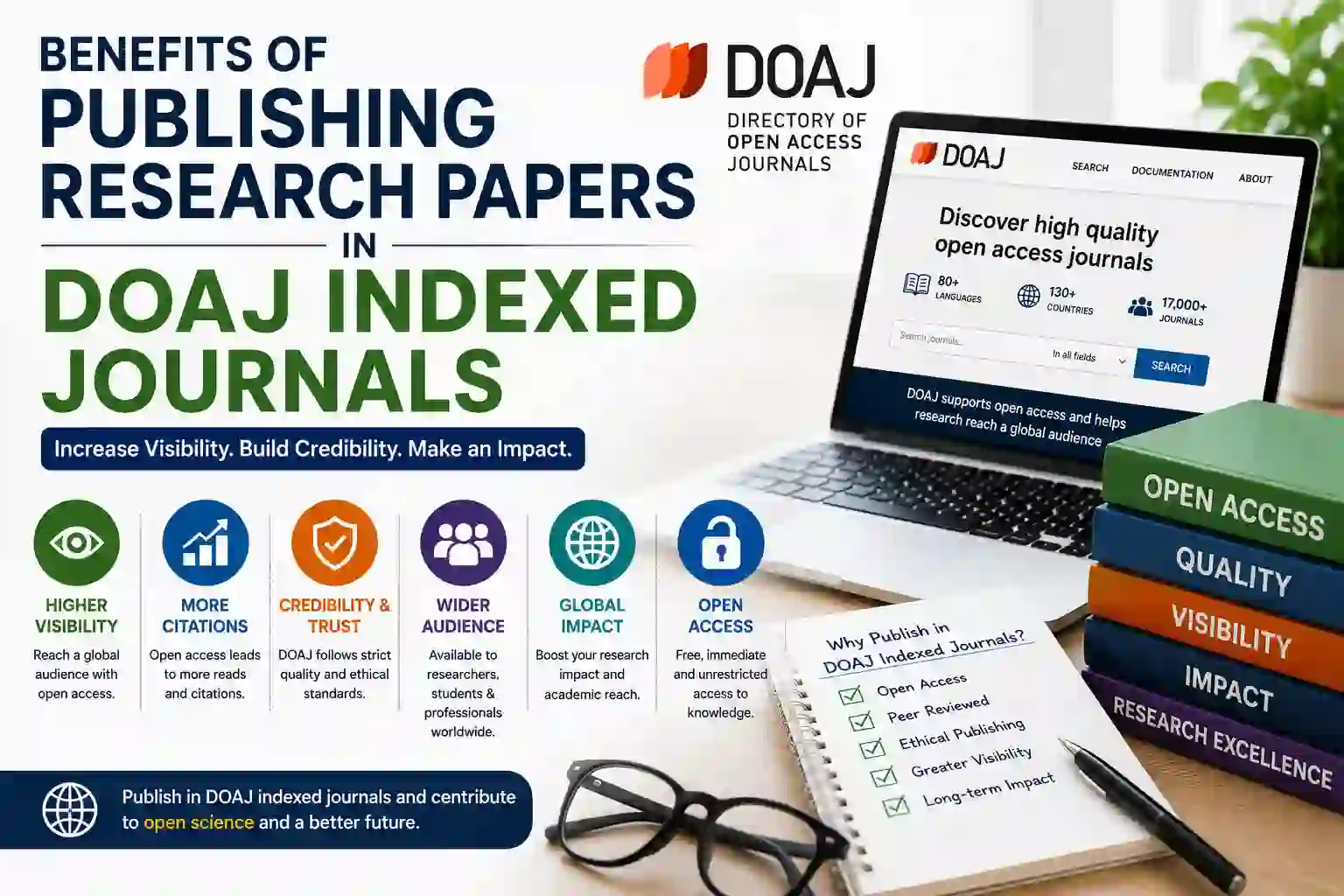
Publishing research in reputable academic journals is essential for researchers who want to increase the visibility, credibility, and impact of their work. Among the various journal directories available today, the Directory of Open Access Journals (DOAJ) has become one of the most trusted resources for identifying high-quality open access journals.
For PhD scholars, faculty members, researchers, and students, publishing in DOAJ indexed journals can offer significant advantages beyond simple publication. These journals support open access principles, allowing research to reach a wider audience while maintaining academic and ethical publishing standards.
This guide explains the key benefits of publishing research papers in DOAJ indexed journals and how researchers can use DOAJ to identify credible publication opportunities.
Researchers seeking publication guidance and multidisciplinary research opportunities can also visit the IJMRE journal platform.
The Directory of Open Access Journals (DOAJ) is an international directory that indexes high-quality open access scholarly journals from a wide range of academic disciplines.
DOAJ aims to improve the visibility, accessibility, reputation, and impact of open access research publications worldwide.
Researchers unfamiliar with DOAJ can read What is DOAJ? Understanding the Directory of Open Access Journals for a complete overview.
One of the biggest advantages of publishing in DOAJ indexed journals is increased research visibility.
Because DOAJ journals provide open access to published articles, researchers, students, policymakers, and professionals worldwide can access research without subscription barriers.
This broader accessibility helps:
Research that is freely accessible is often more likely to be read and cited by other scholars.
Open access publishing helps remove barriers that can limit the dissemination of scientific knowledge.
Although citations depend on research quality and relevance, wider accessibility can increase opportunities for academic recognition.
DOAJ indexed journals contribute to the global open science movement by making scholarly content freely available.
This approach supports:
Researchers can share findings with a broader audience, including individuals and institutions that may not have access to subscription-based databases.
Many DOAJ indexed journals follow established publishing standards and transparent editorial practices.
Before inclusion in DOAJ, journals are evaluated based on factors such as:
This helps researchers identify journals that demonstrate professional publishing practices.
Many DOAJ journals use peer review to evaluate submitted manuscripts before publication.
Peer review helps improve:
Researchers can learn more about this process in How Peer Review Works in Academic Journals.
DOAJ includes journals from numerous countries and disciplines, providing researchers with international visibility.
Publishing in internationally accessible journals helps:
Researchers frequently use DOAJ to identify relevant journals and scholarly articles.
Because DOAJ acts as a centralized directory, articles published in listed journals can become easier for readers to discover.
Greater discoverability often contributes to stronger long-term research visibility.
Many DOAJ indexed journals publish research across multiple disciplines, making them attractive options for interdisciplinary studies.
Fields commonly represented include:
Researchers interested in interdisciplinary publication can also explore:
One challenge facing researchers today is identifying trustworthy journals among the growing number of predatory publishers.
Although inclusion in DOAJ should not be the only evaluation criterion, it can serve as an additional indicator when assessing journal quality.
Researchers should still verify:
Authors can also review How to Avoid Fake Scopus Journals for additional guidance.
Publishing in reputable journals contributes to a researcher's professional profile and academic reputation.
High-quality publications can support:
Selecting credible journals is often more important than pursuing publication based solely on indexing claims.
Researchers can learn more from Why Authors Should Publish in Top Peer Reviewed Journals Instead of Fake Scopus Journals.
Before submitting a manuscript, researchers should evaluate:
A well-matched journal increases the likelihood of successful publication and stronger research impact.
For a complete selection strategy, read How to Select the Right Peer Reviewed Journal for Publication.
Researchers often confuse DOAJ, Scopus indexing, and peer review because they all relate to journal quality.
For deeper understanding, researchers can read:
Publishing research papers in DOAJ indexed journals offers numerous benefits, including improved visibility, wider accessibility, enhanced credibility, and stronger opportunities for academic impact.
For researchers committed to ethical and high-quality scholarly publishing, DOAJ serves as a valuable resource for identifying reputable open access journals.
By combining careful journal evaluation with strong research practices, authors can maximize the reach and influence of their scholarly work.
DOAJ indexed journals, benefits of DOAJ journals, open access publishing, directory of open access journals, peer reviewed journals, academic publishing, scholarly journals, research visibility, journal publication, multidisciplinary research journals
The International Journal of Multidisciplinary Research and Explorer (IJMRE) is a non-profit, open-access journal that does not charge any submission, processing, or publication fees. Donations made through this button are entirely voluntary and are used solely to support the maintenance, technical infrastructure, and continued accessibility of open research. Contributions do not influence editorial decisions or the peer review process in any way.