ISSN (Online): 2833-7298
ISSN (Print): 2833-7301
Publication Fees: Free (Free up to 10 pages; USD 5 per additional page)

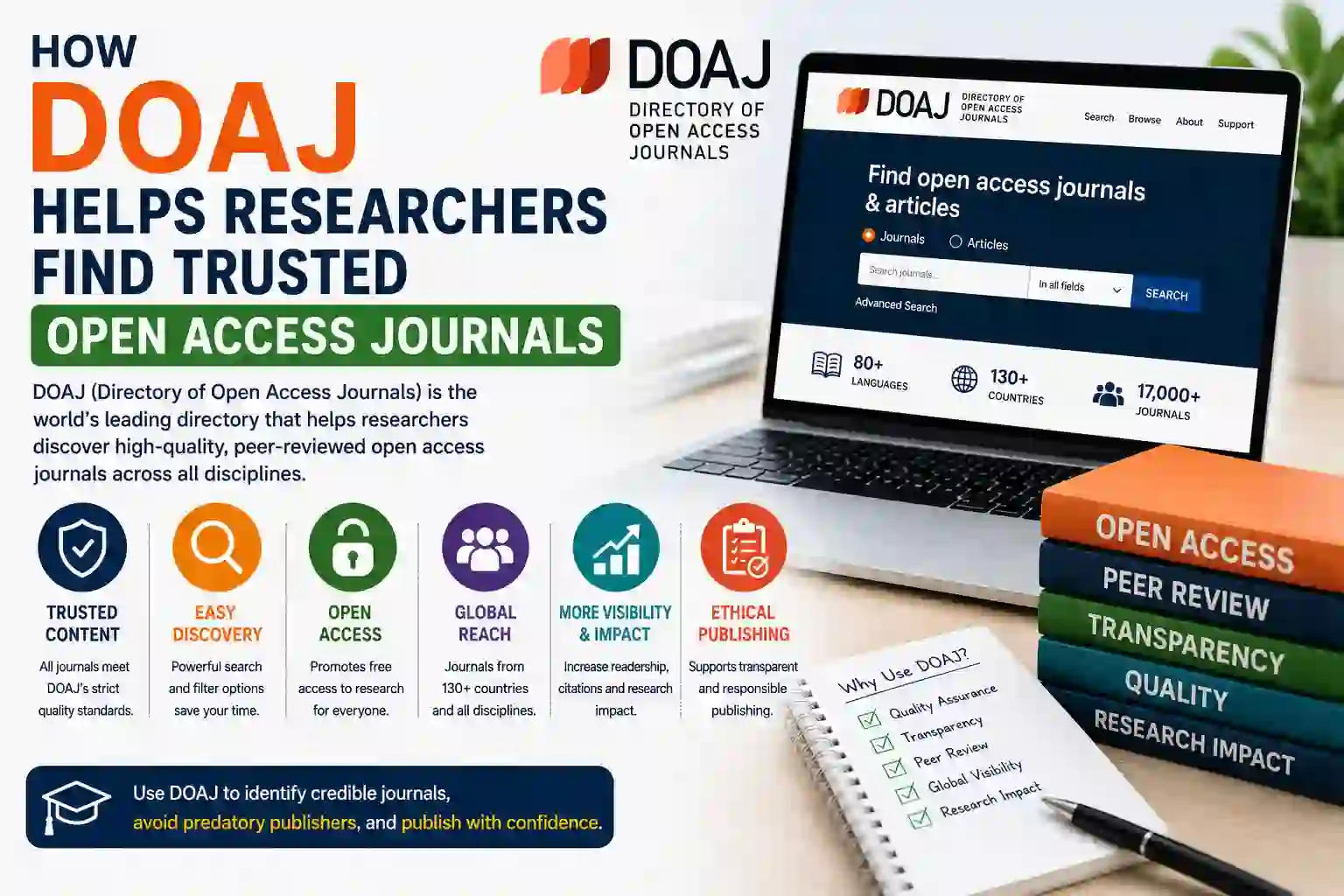
Selecting the right journal is one of the most important decisions researchers make before submitting their work for publication. With thousands of academic journals available online, identifying trustworthy publication venues can be challenging. Researchers must evaluate journal quality, peer review practices, transparency, indexing status, and publication ethics before making a submission.
The Directory of Open Access Journals (DOAJ) has become one of the most valuable resources for researchers seeking credible open access journals. DOAJ helps authors identify journals that follow recognized publishing standards while providing free access to scholarly research.
This article explains how DOAJ helps researchers find trusted open access journals and why it has become an important tool in academic publishing.
Researchers seeking publication guidance and multidisciplinary research opportunities can also explore the IJMRE Journal Platform.
The Directory of Open Access Journals (DOAJ) is an international online directory that indexes and provides access to quality open access scholarly journals from around the world.
Its primary objective is to improve the visibility, accessibility, reputation, and impact of peer reviewed open access research.
Researchers who are new to DOAJ can first read What is DOAJ? Understanding the Directory of Open Access Journals.
The growth of academic publishing has created both opportunities and challenges for researchers. While more journals are available than ever before, not all journals maintain high academic and ethical standards.
Researchers frequently encounter:
Using trusted journal directories can significantly reduce these risks.
One of the reasons researchers trust DOAJ is its evaluation process.
Before a journal is included, it must provide information regarding:
This screening process helps ensure that listed journals meet recognized publishing standards.
Researchers can search the DOAJ database using various criteria, making it easier to identify journals that match their research topics.
Search options include:
A detailed guide is available in How to Search Journals in the DOAJ Database.
One of the major advantages of DOAJ is that it focuses exclusively on open access publishing.
Open access journals allow readers to access research articles without subscription fees, increasing the reach and visibility of published work.
Benefits include:
Many journals listed in DOAJ use peer review to evaluate submitted manuscripts before publication.
Peer review helps maintain research quality by allowing subject experts to assess:
Researchers can learn more from How Peer Review Works in Academic Journals.
Predatory journals often target researchers by promising rapid publication while offering little or no meaningful peer review.
Although DOAJ should not be the only criterion for journal evaluation, it provides an additional layer of confidence when identifying reputable publication venues.
Researchers should still verify:
Additional guidance can be found in How to Avoid Fake Scopus Journals.
Research published in DOAJ-listed journals often benefits from broader accessibility because readers can access articles without subscription restrictions.
Greater accessibility can help:
Researchers interested in the broader advantages of DOAJ can also explore articles related to open access publishing and journal quality.
DOAJ includes journals covering a wide range of academic disciplines and interdisciplinary research areas.
Common subject areas include:
Researchers seeking interdisciplinary publication opportunities can review:
Researchers often compare DOAJ with indexing databases such as Scopus.
| Feature | DOAJ | Scopus |
|---|---|---|
| Primary Focus | Open Access Journals | Citation Indexing |
| Access Type | Open Access | Indexing Database |
| Research Discovery | Open Access Content | Indexed Publications |
| Visibility Support | High | Very High |
Researchers can further explore:
While DOAJ is a valuable starting point, researchers should conduct additional evaluations before submitting their manuscripts.
Important factors include:
For detailed guidance, researchers can read How to Select the Right Peer Reviewed Journal for Publication.
DOAJ plays an important role in helping researchers identify trusted open access journals. By providing access to journals that emphasize transparency, ethical publishing, and quality standards, DOAJ supports informed journal selection and responsible scholarly communication.
Although researchers should always perform additional journal evaluations, DOAJ remains one of the most reliable resources for finding credible open access publication opportunities.
Using DOAJ effectively can help authors improve publication decisions, increase research visibility, and contribute to the global exchange of academic knowledge.
DOAJ, directory of open access journals, trusted open access journals, DOAJ database, peer reviewed journals, open access publishing, journal selection, academic publishing, research publication, scholarly journals
The International Journal of Multidisciplinary Research and Explorer (IJMRE) is a non-profit, open-access journal that does not charge any submission, processing, or publication fees. Donations made through this button are entirely voluntary and are used solely to support the maintenance, technical infrastructure, and continued accessibility of open research. Contributions do not influence editorial decisions or the peer review process in any way.