ISSN (Online): 2833-7298
ISSN (Print): 2833-7301
Publication Fees: Free (Free up to 10 pages; USD 5 per additional page)

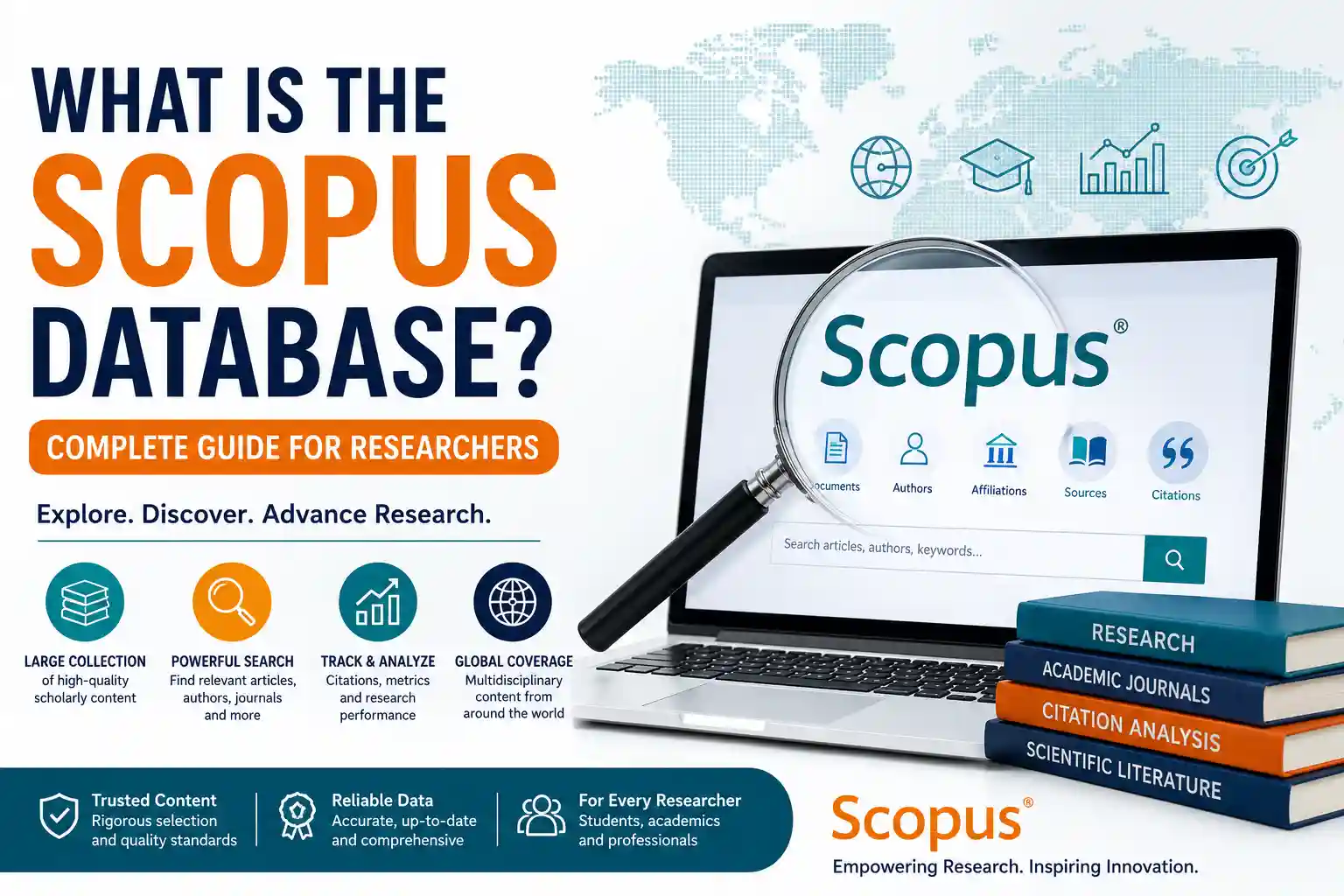
The Scopus database is a major abstract and citation database used by researchers, universities, publishers, and research institutions to discover scholarly literature and track research publications and citations. It covers academic journals, conference proceedings, books, and other scholarly sources across a wide range of disciplines.
If you are planning to publish a research paper, understanding Scopus indexed journals is important. However, finding a journal that claims to be indexed is not enough. Authors should verify its title, ISSN, publisher, coverage years, and current indexing status through the official Scopus Sources list before submitting a manuscript.
This guide explains what the Scopus database is, how journals are selected, how to find and verify indexed journals, how to identify discontinued sources, and what researchers should consider when choosing a journal.
Researchers exploring publication options can also learn about multidisciplinary research journals and how to assess whether a journal's scope matches their work.
Scopus is an abstract and citation database developed by Elsevier. It helps users discover research literature, examine citation relationships, and explore information about scholarly publications and their sources.
Scopus includes different types of scholarly content, such as:
Its subject coverage includes:
Scopus provides tools for searching scholarly publications and examining citation information. Its coverage and source records can help researchers evaluate the publication history of a journal or other scholarly source.
Researchers use Scopus for literature discovery, citation analysis, and research evaluation. Publications covered by Scopus can become discoverable through its search platform, although visibility and citation outcomes depend on several factors, including research relevance, accessibility, and interest among other researchers.
Scopus information may be used by universities and research institutions for purposes such as:
Some universities and academic organizations also consider Scopus-indexed publications in their promotion, doctoral, funding, or performance-evaluation rules. However, the requirements differ between institutions, countries, and academic authorities. Authors should always consult the applicable regulations rather than assume that every Scopus publication satisfies a particular requirement.
Journals seeking inclusion in Scopus undergo an evaluation process. The Content Selection and Advisory Board (CSAB) assesses journal applications against Scopus selection criteria.
The evaluation considers several aspects of a journal, including:
Meeting these criteria does not mean that a journal will automatically be accepted. Scopus makes its own selection decisions, and journals may be evaluated or reviewed again according to its policies.
Scopus indexed journals are scholarly journals whose content is covered by the Scopus database. Inclusion indicates that a journal has been selected for coverage under Scopus's source-selection process.
Scopus selection criteria require journals to have a peer-reviewed content policy. Nevertheless, indexing and peer review are two different concepts:
A peer-reviewed journal does not necessarily have to be indexed in Scopus. Similarly, authors should not assume that a journal's previous inclusion means it is currently covered. Always verify the source record and coverage years.
For a detailed comparison, read Scopus indexed journals vs peer-reviewed journals.
The most reliable way to find journals covered by Scopus is to use the official Scopus Sources page. Avoid relying only on lists published by third-party websites because source coverage and indexing status can change.
Follow these steps:
Do not rely only on a journal's statement that it is indexed. The official Scopus source record should be your primary reference.
Before submitting a manuscript, compare the journal's details with its official Scopus source record. The following checklist can help:
| Verification item | What to check |
|---|---|
| Journal title | Confirm that the complete title matches the official source record. |
| ISSN and E-ISSN | Compare the print and online ISSNs, where applicable. |
| Publisher | Check whether the publisher matches the journal's stated publisher. |
| Coverage years | Review the years of coverage shown in the Scopus record. |
| Source status | Check whether the source is active or discontinued. |
| Subject area | Confirm that the listed subject areas are relevant to the journal. |
Important: A similar journal title does not establish that a particular journal is indexed. Two journals may have similar names but different ISSNs and publishers. Always match the exact journal identity.
One of the most important checks is whether a journal's Scopus coverage is current. A journal may have been indexed in previous years but later discontinued from Scopus coverage.
Discontinuation does not necessarily mean that every previously published article has been removed from the database. It means that the source's coverage status has changed. The coverage years shown in Scopus should therefore be examined carefully.
| Point | Active source | Discontinued source |
|---|---|---|
| Scopus status | Currently listed as an active source, subject to the displayed record. | Coverage has been discontinued. |
| Coverage years | May include current coverage years. | Shows the applicable past coverage period. |
| New publications | May be covered if they fall within the source's coverage. | New publications after the coverage end date should not be assumed to be covered. |
| Author action | Check the latest source record before submission. | Examine the coverage end date and any relevant institutional rules. |
Authors should not treat old indexing certificates, screenshots, or third-party journal lists as proof of current coverage. Verify the latest information directly through Scopus.
Scopus indexing and peer review serve different purposes. Scopus is a bibliographic and citation database, whereas peer review is a process used by journals to evaluate submitted research.
| Feature | Scopus Indexed Journals | Peer-Reviewed Journals |
|---|---|---|
| Meaning | Journals covered by the Scopus database. | Journals that evaluate manuscripts through peer review. |
| Main purpose | Scholarly discovery and citation indexing. | Manuscript evaluation before publication. |
| Peer review | Scopus selection criteria require peer-reviewed content. | Peer review is a defining part of the journal's publication process. |
| Citation information | Available through Scopus for covered records. | Depends on whether the journal's content is included in a citation database. |
| Indexing requirement | Must meet Scopus selection requirements. | Does not automatically require Scopus indexing. |
Read more about the differences between Scopus indexed and peer-reviewed journals before selecting a publication venue.
Peer review is an important part of scholarly publishing. Depending on the journal's review model, manuscripts may be assessed by one or more subject experts who examine the research question, methodology, originality, evidence, and relevance.
A transparent peer-review process generally explains:
Authors can explore peer-reviewed research articles and publication standards to better understand the structure and evaluation of scholarly papers.
Publishing in a journal covered by Scopus may offer several practical advantages, but authors should understand both the benefits and limitations.
Scopus covers research from a broad range of academic disciplines. Researchers working in emerging areas can use it to identify related studies, review publication trends, and discover journals that publish work in their subject areas.
Examples of research areas include:
Researchers working across multiple disciplines may consider a multidisciplinary journal when its aims and scope genuinely match their research. Read about multidisciplinary research publishing to understand the characteristics of this type of journal.
Scopus indexing should be only one factor in journal selection. A suitable journal should also match the subject, methodology, audience, and academic purpose of the manuscript.
Before submitting, evaluate the following points:
Do not choose a journal solely because it advertises fast publication, low fees, or indexing. Verify its policies and suitability before submitting your research.
Visit the official Scopus Sources page and search using the complete journal title or ISSN. Compare the publisher, source details, coverage years, and status with the journal's official website.
Scopus source information can change as journals are added, reviewed, or discontinued. Always consult the official Scopus Sources record for the latest available information instead of relying on an old downloaded list.
Search for the journal in Scopus Sources and review its source status and coverage years. If the source is marked discontinued, check the coverage end date before assuming that recently published articles are covered.
No. Indexing does not guarantee manuscript acceptance. Every journal has its own submission requirements, editorial screening, peer-review process, and acceptance criteria.
No. Many peer-reviewed journals are not included in Scopus. Journals must undergo the database's selection process to become Scopus sources.
No. Scopus includes journals with different publishing and access models, including open-access and subscription-based journals. Check the journal's website for its access policy and publication charges.
Previously covered articles may remain in the database even after a source is discontinued. However, authors should not assume that publications appearing after the listed coverage end date are covered by Scopus.
No. Consider the journal's scope, peer-review process, editorial standards, publication ethics, fees, audience, and current indexing status. The best journal is one that is suitable for your research and academic objectives.
The International Journal of Multidisciplinary Research and Explorer (IJMRE) publishes peer-reviewed, open-access research across multidisciplinary academic areas. Researchers should review the journal's aims and scope, peer-review policy, publication ethics, and author guidelines before deciding whether to submit.
Authors interested in submitting work can visit the IJMRE official website to review journal information and submission guidelines. Please evaluate the journal against your research requirements and any applicable institutional publication rules.
The Scopus database is an important resource for discovering scholarly literature, examining citation information, and exploring academic publication records. Understanding how Scopus works helps researchers make more informed decisions about journal selection and publication.
Before submitting a manuscript, verify the journal through the official Scopus Sources list. Check the exact title, ISSN, publisher, coverage years, and current status. Also assess the journal's scope, peer-review process, publication ethics, and fees.
Most importantly, choose a journal based on the suitability and scholarly quality of your research—not merely on an indexing claim or publication promise.
Scopus database, Scopus indexed journals, Scopus journal list, how to find Scopus indexed journals, how to check Scopus indexing, Scopus Sources, Scopus journal verification, discontinued Scopus journals, active Scopus journals, peer-reviewed journals, Scopus coverage years, academic journal indexing, research publication, multidisciplinary research journals.
The International Journal of Multidisciplinary Research and Explorer (IJMRE) is a non-profit, open-access journal that does not charge any submission, processing, or publication fees. Donations made through this button are entirely voluntary and are used solely to support the maintenance, technical infrastructure, and continued accessibility of open research. Contributions do not influence editorial decisions or the peer review process in any way.