ISSN (Online): 2833-7298
ISSN (Print): 2833-7301
Publication Fees: Free (Free up to 10 pages; USD 5 per additional page)

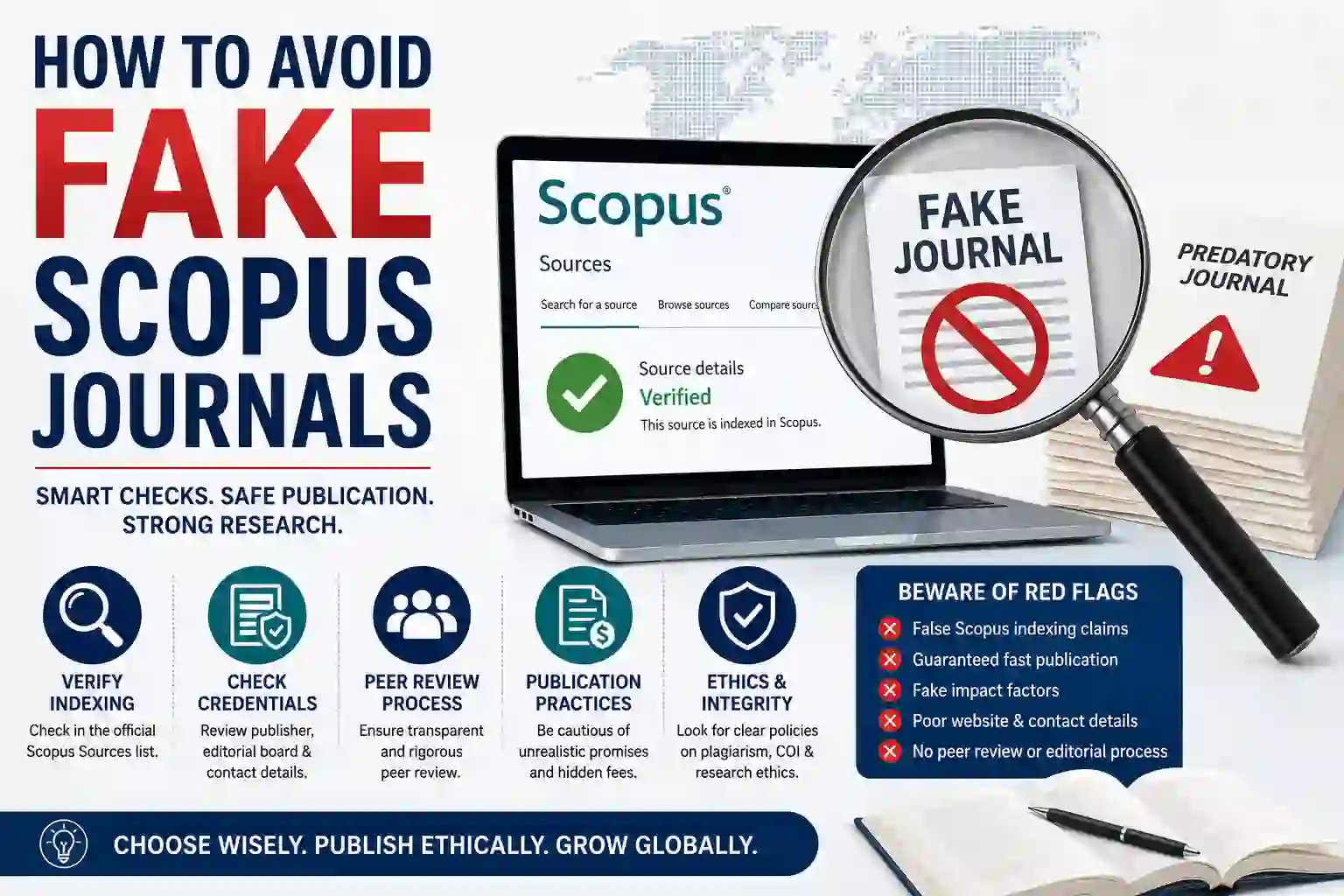
Publishing research in Scopus indexed journals is an important goal for many researchers, academicians, and PhD scholars. However, the rapid growth of predatory and fake journals has created serious challenges for authors looking for genuine publication opportunities.
Many fake journals falsely claim Scopus indexing to attract researchers and collect publication fees without providing proper peer review or academic credibility. Submitting research to such journals can damage an author’s academic reputation and may lead to rejection of research work by universities and institutions.
This guide explains how researchers can identify and avoid fake Scopus journals while selecting reliable peer reviewed publication platforms.
Researchers searching for trusted publication opportunities can also explore the multidisciplinary research journal section for academic publishing information.
Fake Scopus journals are journals that falsely claim to be indexed in the Scopus database or misuse indexing information to attract manuscript submissions.
These journals often:
Publishing in fake journals can negatively affect:
Submitting research to fake journals may result in:
For researchers working on important academic projects, selecting genuine peer reviewed journals is essential for maintaining research quality and integrity.
Before submitting your manuscript, always verify whether the journal actually appears in the official Scopus journal list.
Important details to verify include:
Fake journals often display outdated or incorrect indexing information on their websites.
Researchers can also read the complete guide on Scopus indexed journals to better understand indexing verification and journal quality standards.
Fake journals often promise publication within a few days without proper peer review.
A genuine peer review process usually requires time for:
Predatory journals often display fake metrics from unknown indexing agencies instead of recognized databases.
Always verify impact claims carefully.
Many fake journals have:
A reliable journal should clearly explain:
Researchers can review examples of peer reviewed articles in scientific report journals to understand standard academic review practices.
Some fake journals list editors and reviewers without permission or provide false academic affiliations.
Authors should verify:
| Feature | Genuine Scopus Journals | Fake Scopus Journals |
|---|---|---|
| Indexing Verification | Officially indexed | False claims |
| Peer Review | Transparent and rigorous | Weak or absent |
| Publication Ethics | Clearly defined | Often missing |
| Editorial Board | Verified experts | Fake or unverified names |
| Publication Timeline | Reasonable review period | Unrealistically fast |
| Academic Recognition | Internationally accepted | Limited or rejected |
Reliable peer reviewed journals improve research quality by ensuring that manuscripts are evaluated by subject experts before publication.
Researchers interested in understanding the relationship between indexing and peer review can read the detailed comparison guide on Scopus journals vs peer reviewed journals.
Before submission, researchers should evaluate:
Researchers searching for trusted publication opportunities can also review the guide on best peer reviewed multidisciplinary research journals.
Modern research often combines multiple academic disciplines such as:
As interdisciplinary research grows, multidisciplinary peer reviewed journals provide wider research visibility and collaboration opportunities.
The IJMRE journal website supports ethical and transparent academic publishing through:
Avoiding fake Scopus journals is essential for protecting academic credibility and ensuring research quality. Researchers should always verify indexing claims, review publication ethics, and evaluate peer review transparency before submitting manuscripts.
Publishing in genuine Scopus indexed peer reviewed journals improves research visibility, professional recognition, and long-term academic impact.
Careful journal selection helps authors build a strong research profile and contributes to ethical and reliable academic publishing.
fake Scopus journals, Scopus indexed journals, peer reviewed journals, Scopus journal list, peer review, multidisciplinary journals, academic publishing, research journals, scholarly articles, predatory journals, publication ethics
The International Journal of Multidisciplinary Research and Explorer (IJMRE) is a non-profit, open-access journal that does not charge any submission, processing, or publication fees. Donations made through this button are entirely voluntary and are used solely to support the maintenance, technical infrastructure, and continued accessibility of open research. Contributions do not influence editorial decisions or the peer review process in any way.