ISSN (Online): 2833-7298
ISSN (Print): 2833-7301
Publication Fees: Free (Free up to 10 pages; USD 5 per additional page)

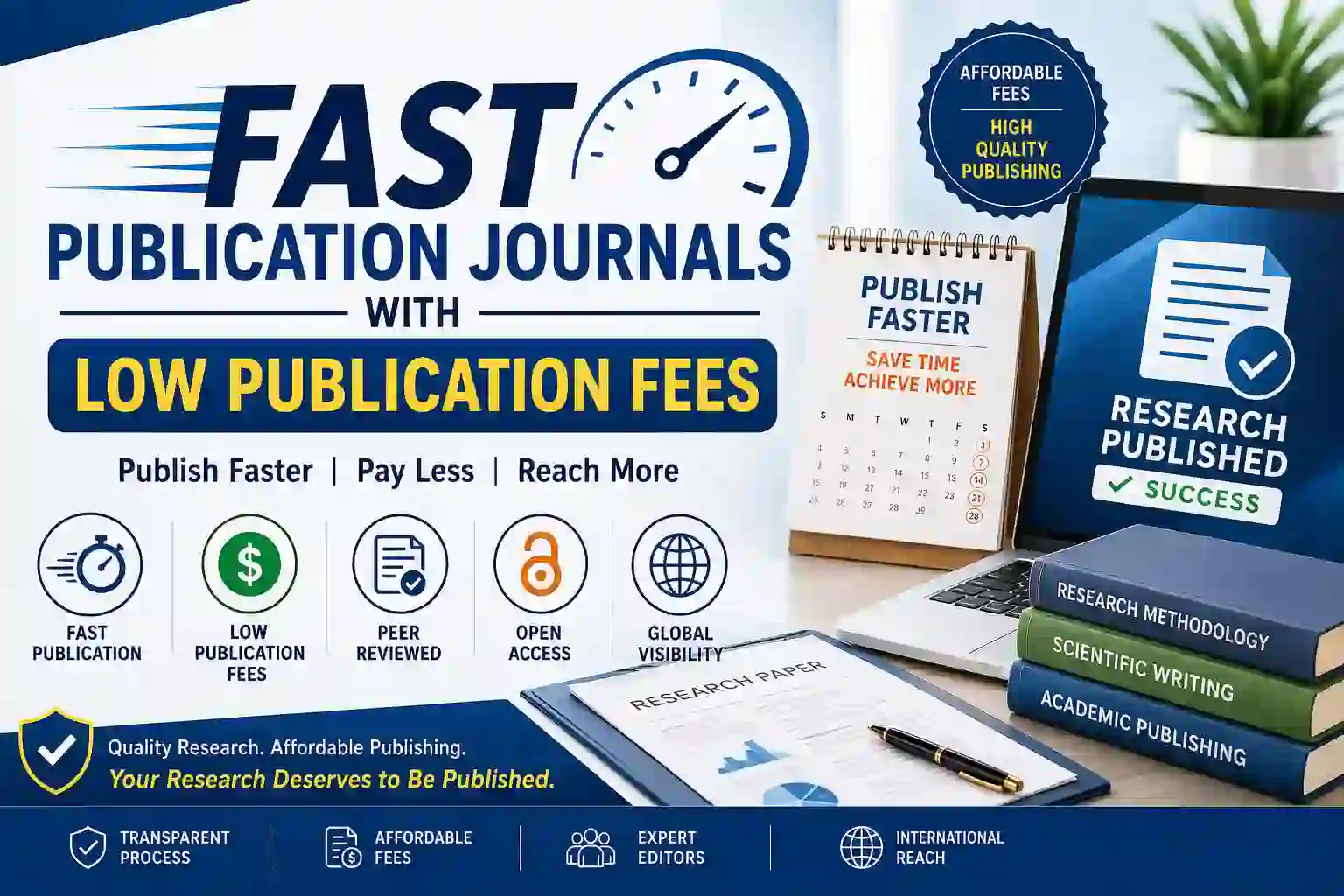
Publishing research quickly without paying expensive publication fees has become a priority for many researchers, especially students, early-career academicians, and independent scholars. Whether you are submitting your first manuscript, meeting a university deadline, or applying for a promotion, choosing a journal that offers both fast publication and affordable publication fees can save valuable time and money.
However, researchers should remember that a fast publication process should never come at the cost of quality. A reputable journal maintains rigorous peer review, transparent editorial policies, ethical publishing practices, and high academic standards regardless of its publication timeline or fees.
In this comprehensive guide, we'll explain how to identify trustworthy fast-publication journals with low publication fees, what to look for before submitting your manuscript, and how to avoid predatory publishers.
Fast publication journals are academic journals that streamline their editorial workflow to reduce the time between manuscript submission and final publication. They achieve this through efficient manuscript screening, prompt reviewer assignments, timely editorial decisions, and rapid production after acceptance.
Fast publication does not mean skipping peer review. Legitimate journals continue to evaluate every manuscript for originality, research quality, methodology, ethical compliance, and relevance before making an acceptance decision.
| Publication Stage | Typical Duration |
|---|---|
| Initial Editorial Screening | 2–5 Days |
| Peer Review | 1–3 Weeks |
| Author Revision | Depends on Author |
| Final Editorial Decision | 3–7 Days |
| Online Publication | Within 1 Week After Acceptance |
Low publication fee journals charge a modest Article Processing Charge (APC) to support editorial management, DOI registration, website hosting, copyediting, long-term digital preservation, and open-access publication.
Unlike high-cost journals that may charge hundreds or even thousands of dollars, affordable journals aim to make academic publishing accessible without compromising editorial quality.
The demand for budget-friendly journals has increased significantly in recent years. Researchers often need timely publication for academic requirements, grant reporting, thesis submission, job applications, or professional promotions.
Affordable journals with transparent editorial policies provide an excellent balance between publication speed, academic quality, and cost-effectiveness.
Before submitting your manuscript, verify that the journal offers more than just quick publication. A trustworthy journal should demonstrate transparency and adherence to recognized publishing standards.
Absolutely not.
Many excellent journals intentionally keep publication fees affordable to encourage research participation from students, researchers in developing countries, and authors with limited financial support. The true measure of a journal is its editorial quality, peer-review standards, publication ethics, and academic reputation—not the amount it charges.
Researchers should evaluate journals based on their transparency, indexing, editorial practices, and publication history rather than assuming that higher fees always indicate better quality.
With thousands of journals available online, choosing the right one can be challenging. While many journals genuinely provide fast publication and affordable publication fees, others make unrealistic promises without maintaining proper editorial standards.
Before submitting your manuscript, carefully evaluate the journal using the following criteria.
A reputable journal clearly explains how manuscripts are reviewed. Whether it follows single-blind, double-blind, or open peer review, the process should be transparent and focused on maintaining research quality.
The journal should list qualified editors with academic affiliations and expertise in relevant subject areas. An experienced editorial board is a strong indicator of publication quality.
Reading recently published articles helps you assess the journal's writing quality, research standards, formatting consistency, and overall professionalism.
Reliable journals openly display their publication fees on their website. There should be no hidden charges, and authors should understand when payment is required.
Look for clearly written policies covering publication ethics, plagiarism screening, copyright, licensing, corrections, retractions, and conflicts of interest.
One of the biggest misconceptions among researchers is that journals offering rapid publication accept every submitted manuscript. This is not true for reputable journals.
Legitimate journals maintain strict editorial standards regardless of publication speed. Every manuscript is evaluated for:
If a manuscript does not meet these standards, it may be rejected or returned for revision, regardless of whether the journal offers fast publication.
Researchers should be cautious when evaluating journals that advertise extremely fast publication. Warning signs include:
Fast publication journals are particularly beneficial for researchers who have strict academic or professional deadlines.
| Feature | Traditional Journals | Fast Publication Journals |
|---|---|---|
| Review Time | 2–6 Months | 1–4 Weeks |
| Publication Time | Several Months | Within Weeks After Acceptance |
| Peer Review | Yes | Yes |
| Editorial Standards | High | High (Reputable Journals) |
| Publication Fees | Free or High APC | Low to Moderate APC |
| Suitable For | General Academic Publishing | Deadline-Oriented Researchers |
A journal's publication fee should never be the only factor influencing your decision. Instead, choose a journal that combines affordable publication costs with transparent editorial practices, ethical publishing standards, and a rigorous peer-review process. Fast publication is valuable only when it maintains academic integrity and research quality.
Selecting the right journal requires more than simply finding the lowest publication fee or the shortest review time. Researchers should evaluate journals carefully to ensure that their work is published in a credible and respected publication.
Always ensure your manuscript aligns with the journal's aims and scope. Submitting to an appropriate journal significantly increases the chances of successful peer review and acceptance.
Before submission, review the journal's formatting requirements, manuscript structure, reference style, word limits, and ethical policies. Following these guidelines reduces delays during editorial screening.
Journals that publish quarterly, bi-monthly, or monthly generally have a predictable publication schedule. Regular publication reflects consistent editorial management.
Reliable journals provide clear information about editors, reviewers, publication ethics, copyright policies, licensing, and withdrawal procedures.
Reading previously published articles helps determine whether the journal publishes high-quality research in your field and maintains professional formatting standards.
Reality: Reputable fast-publication journals still conduct thorough peer review. Efficient editorial workflows reduce delays without compromising quality.
Reality: Many affordable journals are operated by universities, scholarly societies, and responsible publishers that intentionally keep publication fees low while maintaining high editorial standards.
Reality: Publication fees do not determine journal quality. Editorial integrity, peer review, ethical publishing, and research impact are much more important.
Reality: Researchers should distinguish between efficient editorial management and unrealistic promises of instant publication.
Use this checklist before selecting any journal:
Open-access publishing allows research articles to be freely available to readers worldwide. This increases visibility, encourages collaboration, and may improve citation opportunities because researchers can access articles without subscription barriers.
Affordable open-access journals make research dissemination accessible while reducing financial barriers for authors.
The International Journal of Multidisciplinary Research and Explorer (IJMRE) provides researchers with an ethical, transparent, and efficient publication platform across multiple disciplines.
IJMRE offers:
A fast publication journal is one that efficiently completes editorial screening, peer review, revisions, and publication while maintaining high academic standards.
Yes. Many reputable journals intentionally keep publication fees affordable while maintaining rigorous peer review and ethical publishing practices.
Yes. Choose journals with transparent editorial policies, qualified editors, structured peer review, and realistic publication timelines.
No. Researchers should consider journal scope, editorial quality, peer-review standards, indexing, publication ethics, and reputation alongside publication fees.
Verify the journal's editorial board, peer-review process, publication ethics, transparency, and previously published issues. Be cautious of journals that guarantee acceptance or promise publication within a few days.
Choosing a fast publication journal with low publication fees can help researchers publish their work efficiently without placing unnecessary financial pressure on themselves or their institutions. However, publication speed and affordability should never be the only deciding factors.
Always evaluate a journal based on its peer-review process, editorial transparency, publication ethics, indexing, DOI assignment, and overall academic reputation. A trustworthy journal will provide clear policies, maintain high editorial standards, and support authors throughout the publication process.
Whether you are a student, PhD scholar, faculty member, or independent researcher, selecting a reputable journal ensures that your research reaches the right audience and contributes meaningfully to scientific and academic knowledge.
The International Journal of Multidisciplinary Research and Explorer (IJMRE) is committed to providing researchers with an ethical, transparent, and efficient publishing experience.
Researchers from engineering, management, computer science, education, commerce, social sciences, medical sciences, environmental sciences, agriculture, humanities, and many other disciplines are invited to submit their original research.
Publication timelines vary by journal. Some reputable journals complete peer review and publish accepted papers within a few weeks, while others may take several months depending on reviewer availability and manuscript revisions.
No. Many reputable journals intentionally keep publication fees low to support students, researchers from developing countries, and authors with limited research funding.
Yes. Many journals either charge low publication fees or operate without Article Processing Charges (APCs). Always verify the journal's fee policy before submission.
Review the journal's scope, peer-review process, publication ethics, editorial board, indexing, DOI policy, author guidelines, publication schedule, and publication charges.
Avoid journals that promise guaranteed acceptance, claim unrealistic publication times, hide publication fees, or provide little information about their editorial process and publication ethics.
If you are looking for a trusted multidisciplinary journal that combines fast publication, transparent peer review, and affordable publication fees, consider submitting your manuscript to the International Journal of Multidisciplinary Research and Explorer (IJMRE).
The International Journal of Multidisciplinary Research and Explorer (IJMRE) is a non-profit, open-access journal that does not charge any submission, processing, or publication fees. Donations made through this button are entirely voluntary and are used solely to support the maintenance, technical infrastructure, and continued accessibility of open research. Contributions do not influence editorial decisions or the peer review process in any way.